Press kit no. 5595-11
Journalists, explore this publication-ready project. Create a free v2com media account to download high-resolution images.
Create a media account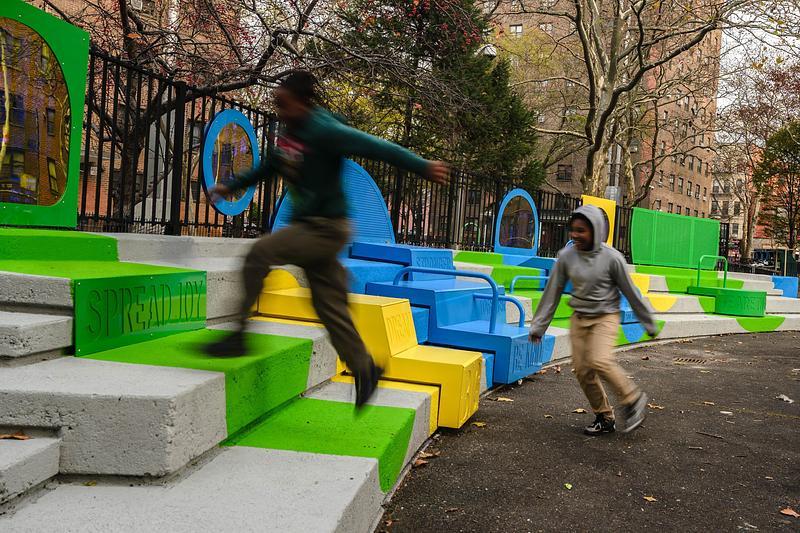
Press Kit | no. 5595-11
Press release only in English
New Community-led Playscape in a New York Public Housing Development
The Urban Conga
The Urban Conga works with a New York Public Housing Community to co-design a multigenerational playscape on forgotten steps.
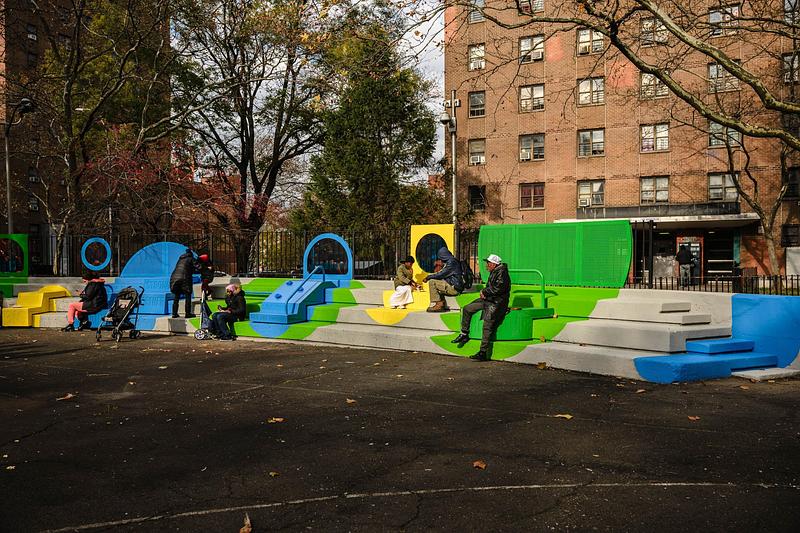
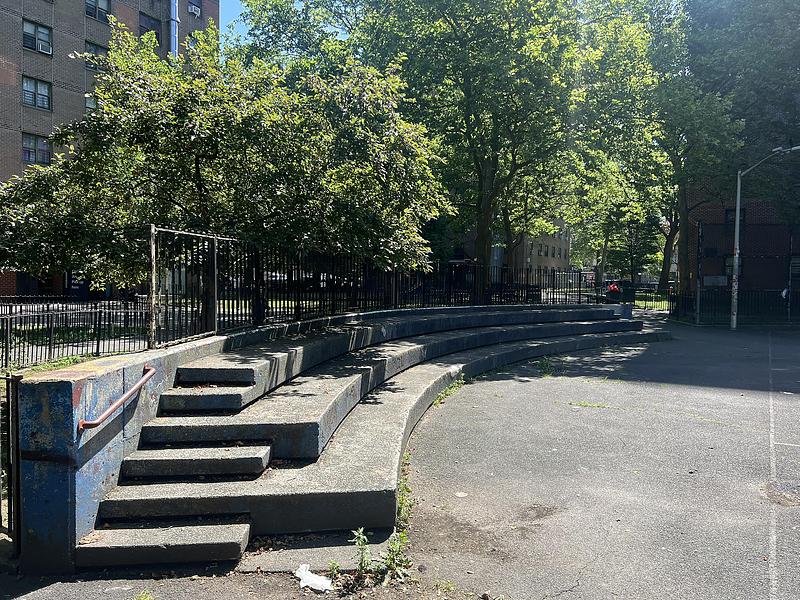
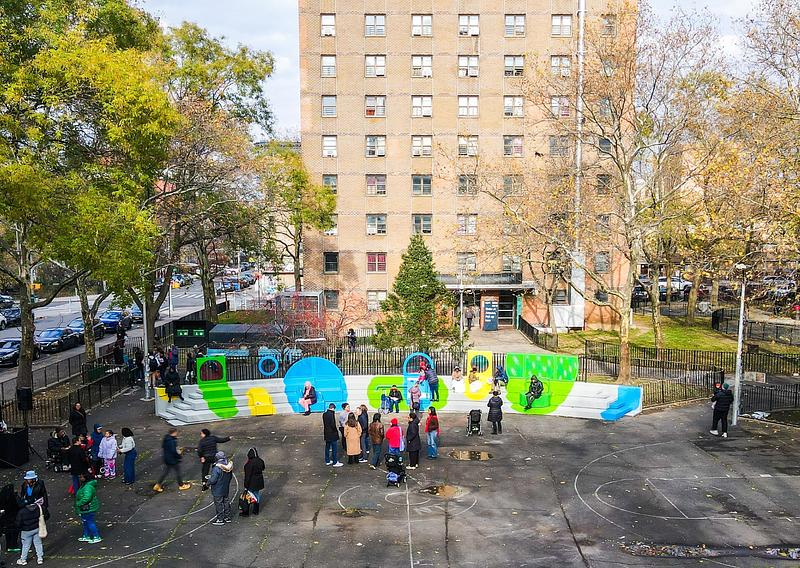
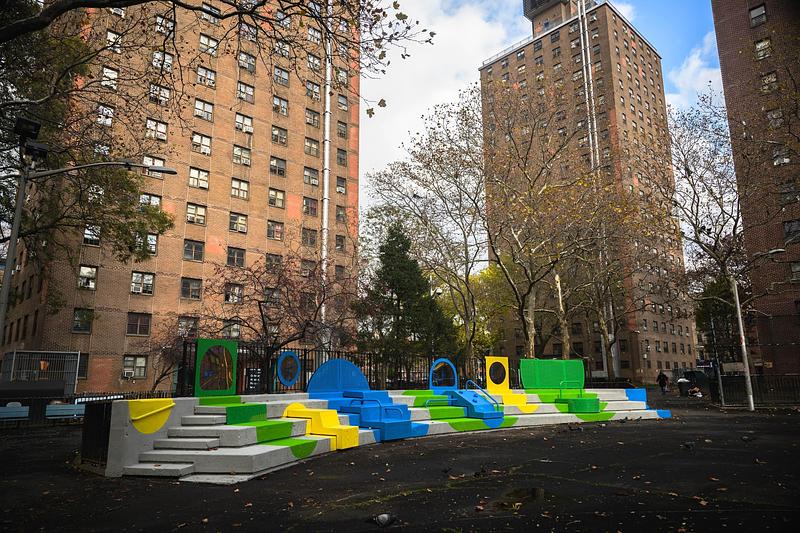
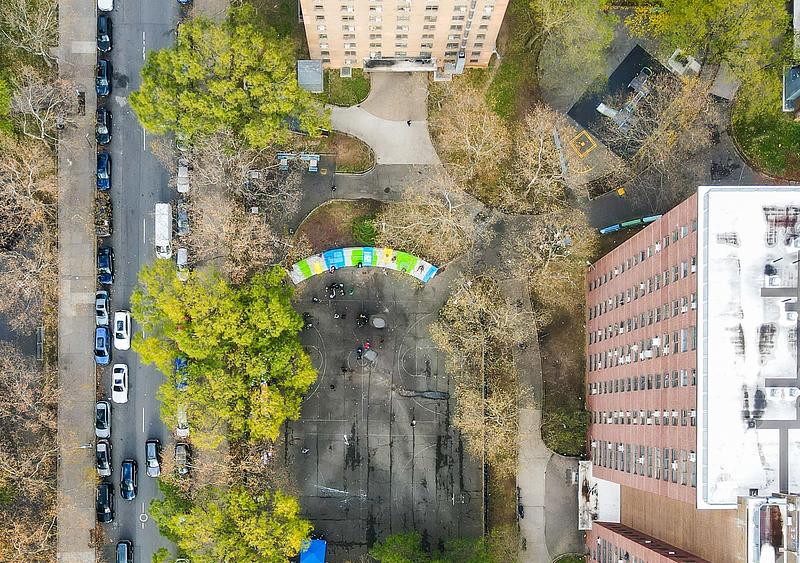
The Common Corner is a community-led revitalization of an existing underutilized concrete bleacher at Morris Houses, a New York Public Housing Development, in Bronx, NY. Common Corner was co-designed by The Urban Conga, a multidisciplinary design studio, in collaboration with the Morris House residents, New York City Housing Authority, The Public Housing Community Fund, the Center for Justice Innovation, and The Jeffrey H. and Shari L. Aronson Family Foundation.
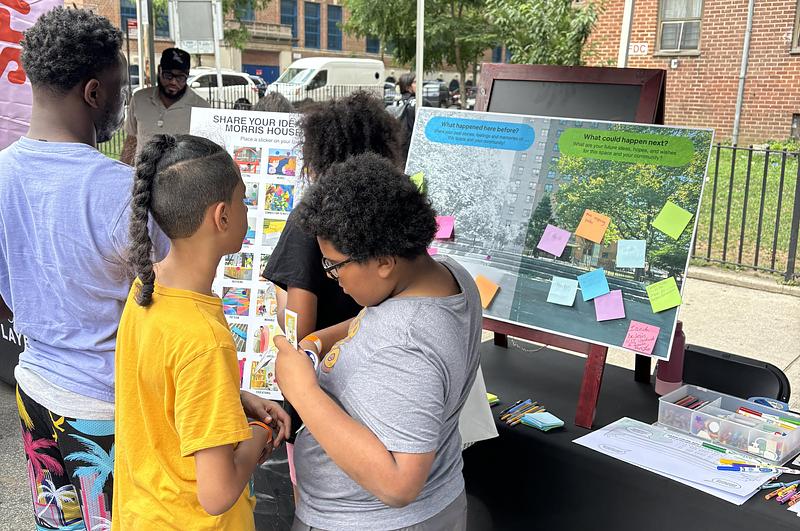
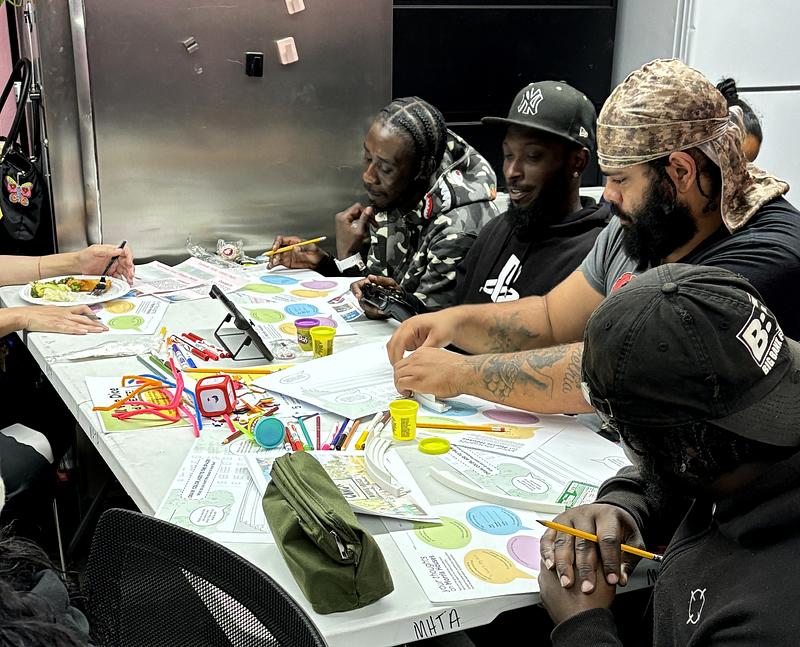
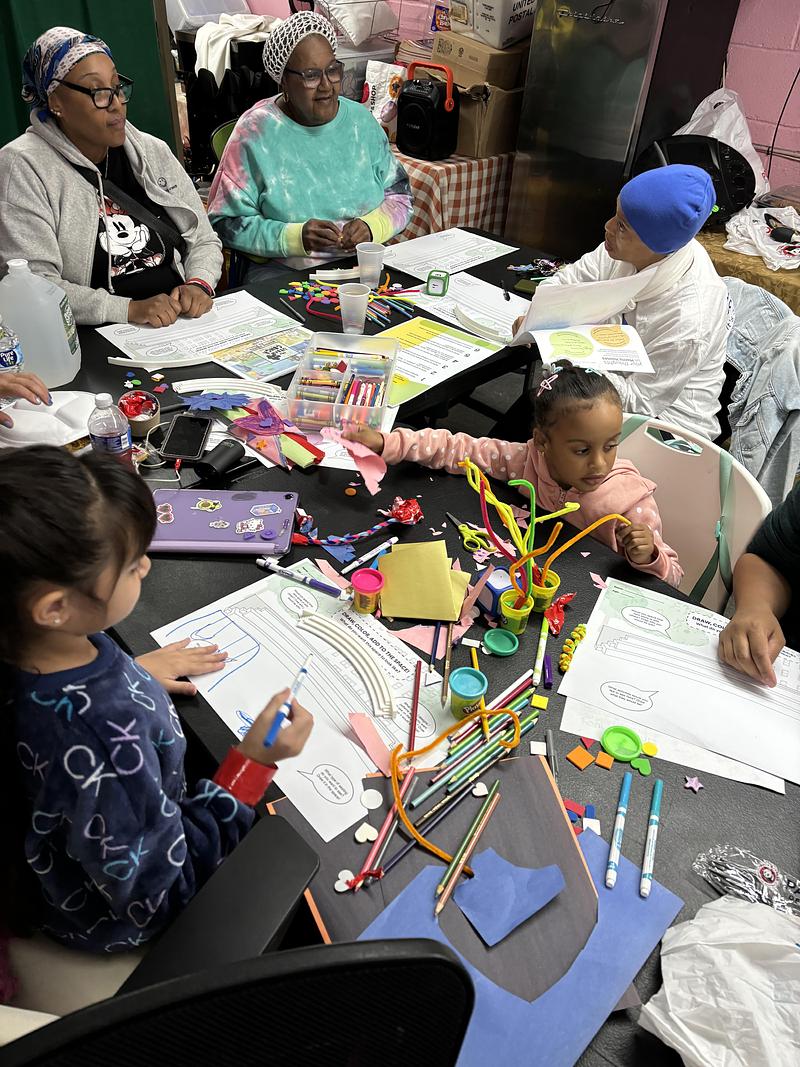
Through initial community surveying, the Morris Houses residents identified the bleachers as a priority for redesign. Decades ago, this area was lively and active, but over time, it had aged and fallen into disuse. The community's goal for this project was to revitalize this open space and to foster renewed activity and vibrancy through multigenerational open-ended play and communal connection. The Urban Conga co-designed the space through a variety of community workshops that used play methodologies to create a safe place for people to share and open up about their dreams, desires, and hopes for their community. These workshops ranged from passive gamified tabling at large community events to constructive and fantasy-play sessions with groups of resident stakeholders. From early conversations about the desires and hopes for the entire area, to the final design of the steps, the community gifted their stories, experiences, feedback, and more to shape every component of the Common Corner.
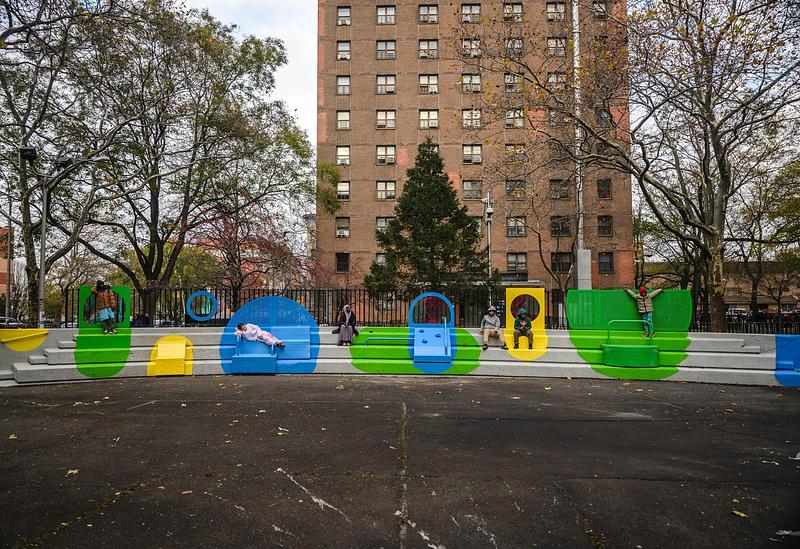
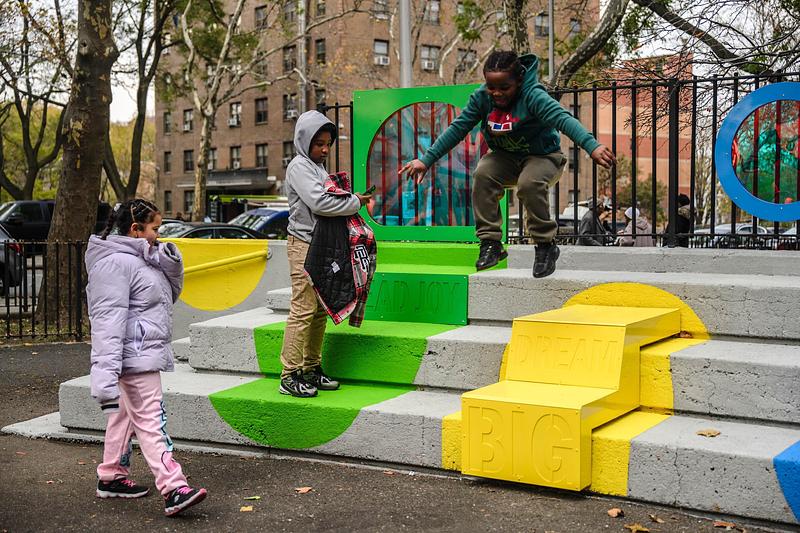
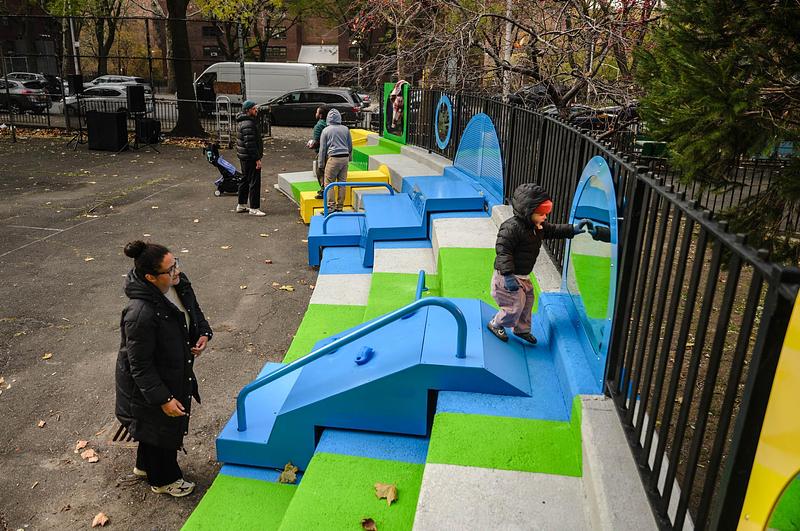
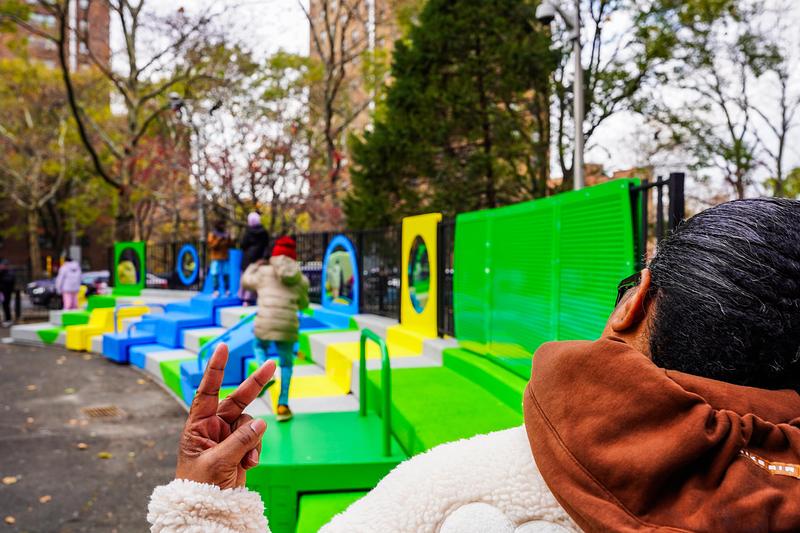
The transformed Common Corner now serves as a flexible gathering place where people can connect socially, exercise, rest, imagine, or even perform. The design is organized into three interconnected zones that draw from different play methodologies—social play, active play, and fantasy play.
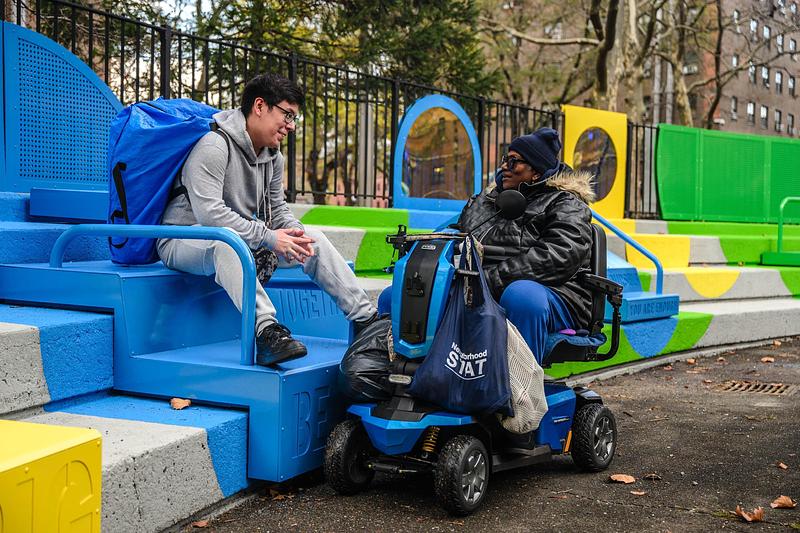
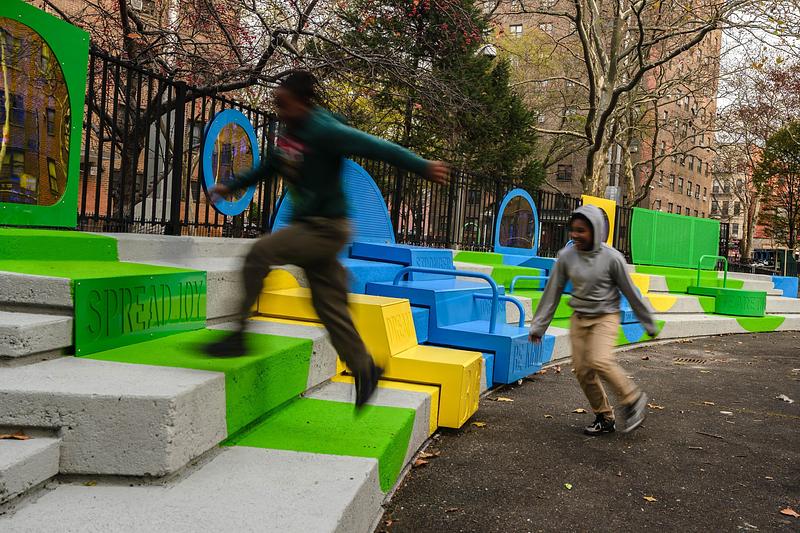
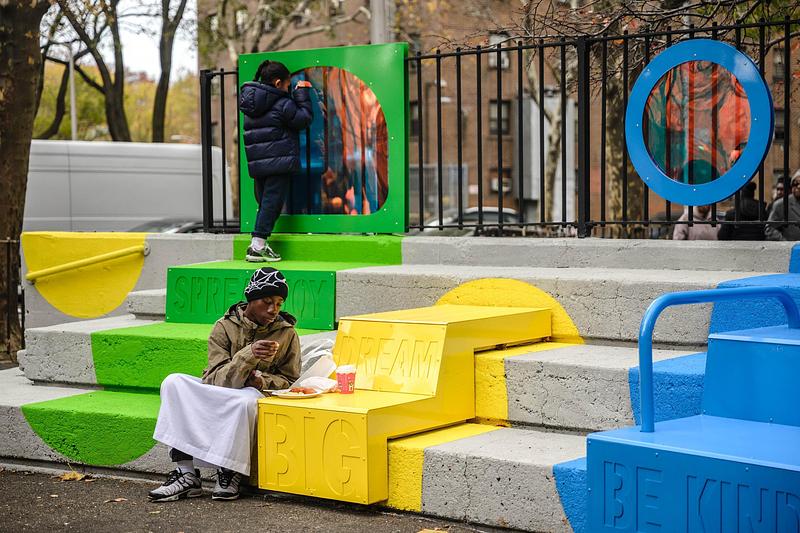
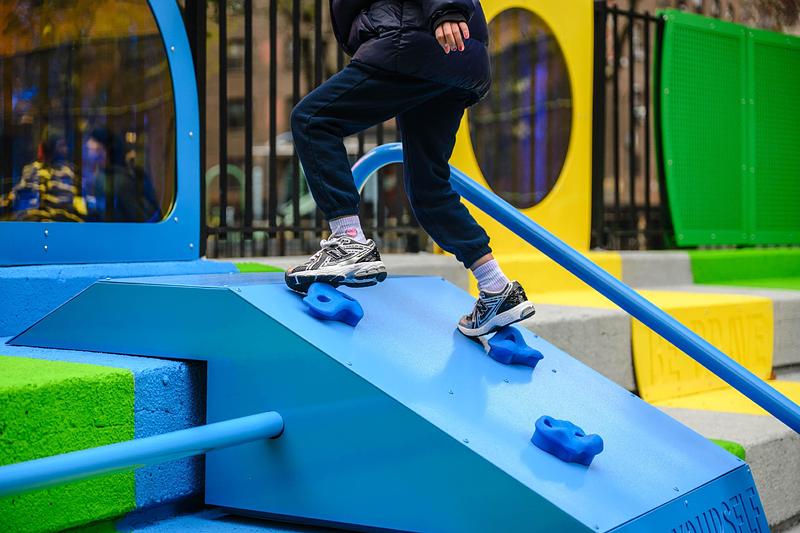
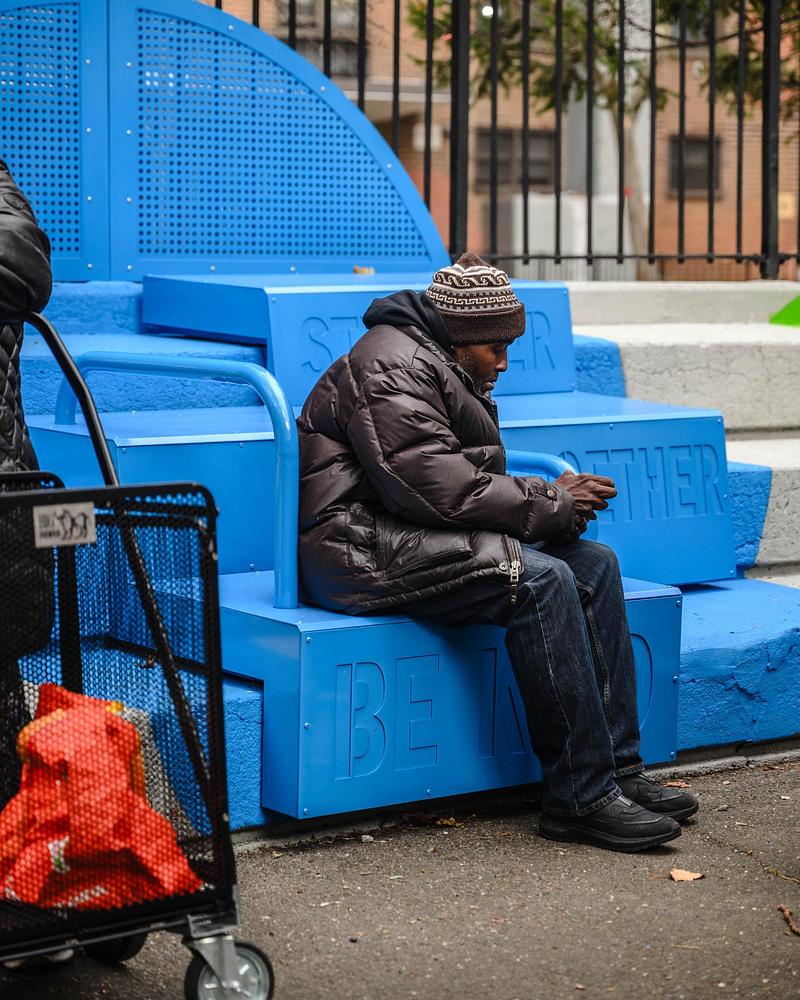
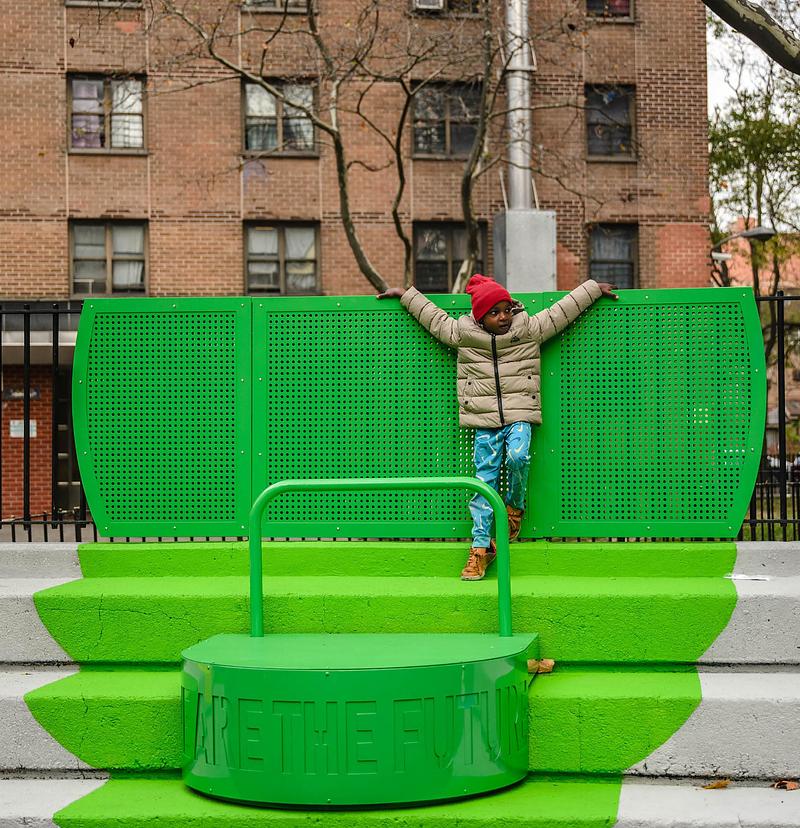
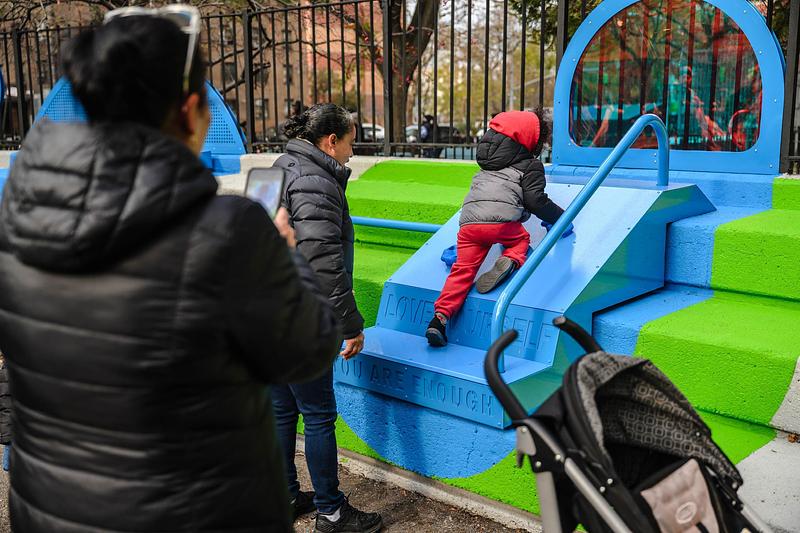
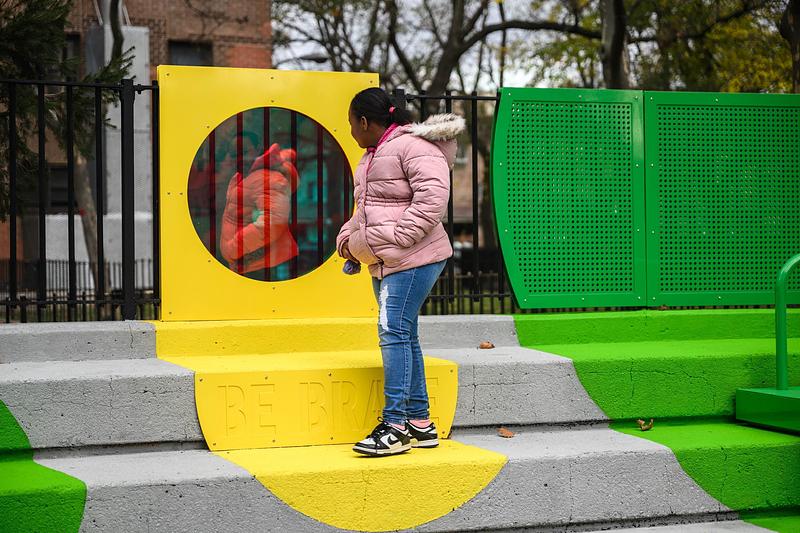
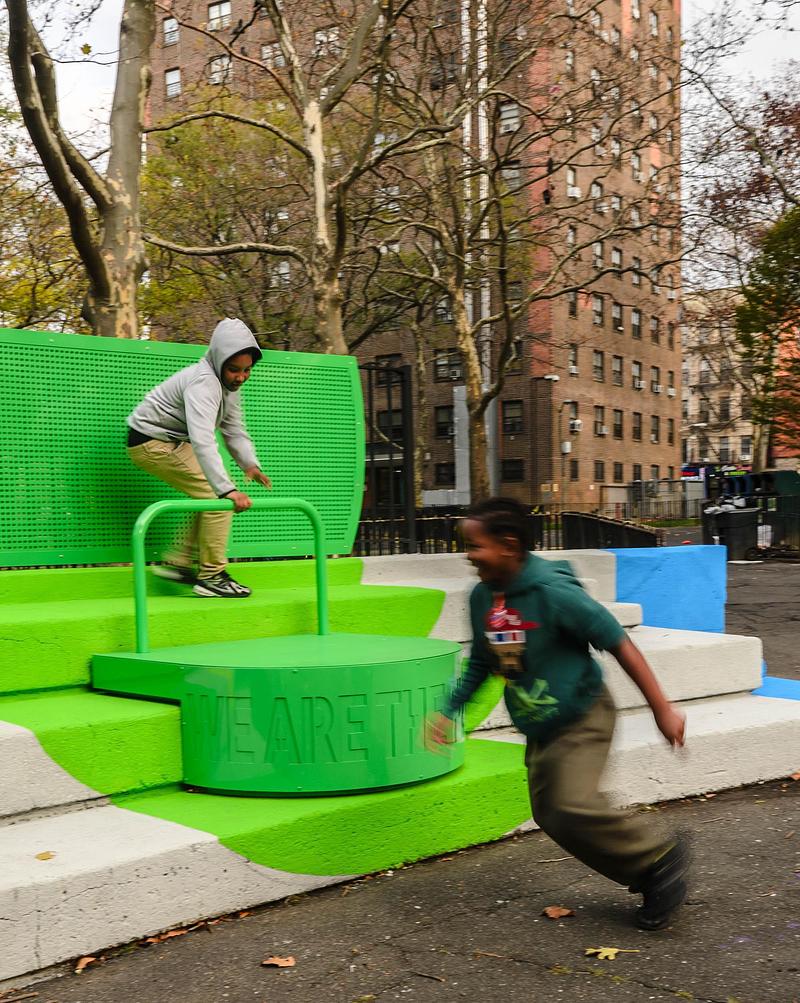
In the social play area, seating was reimagined with greater accessibility in mind, including added grab bars and adjusted heights to improve comfort and ease of use. The active play area encourages physical engagement by offering opportunities for climbing, jumping, balancing, and fitness. The fantasy play area introduces a stage-like platform that invites performance, storytelling, quiet reflection, or even a table for food distribution.
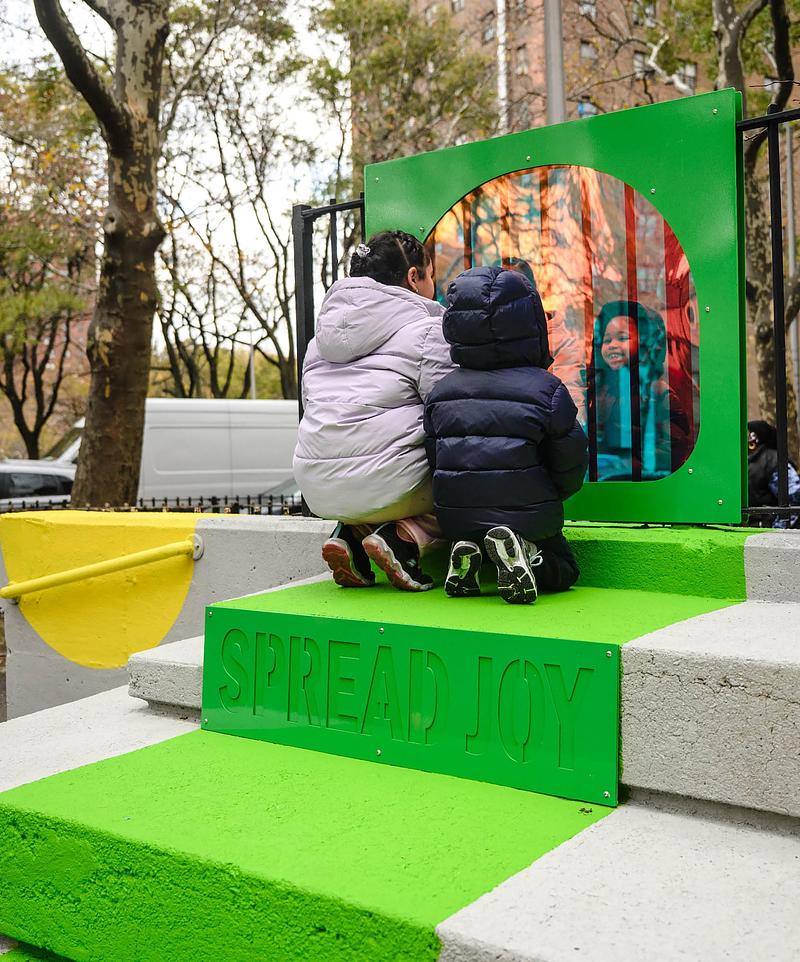
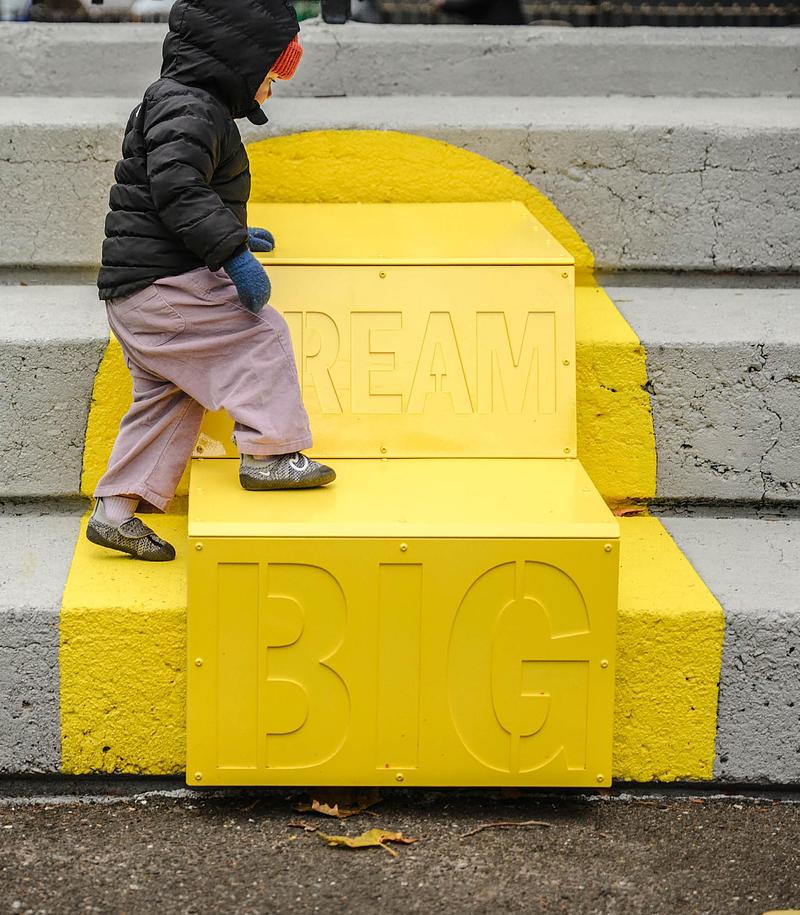
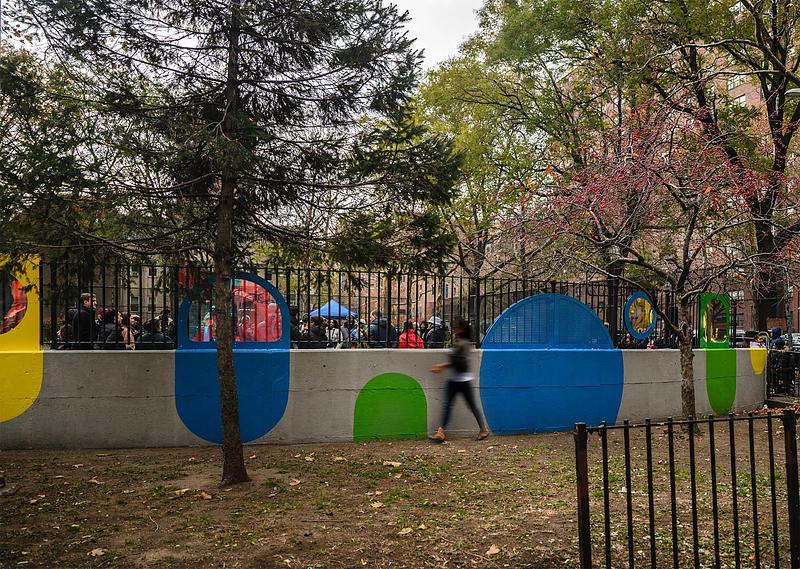
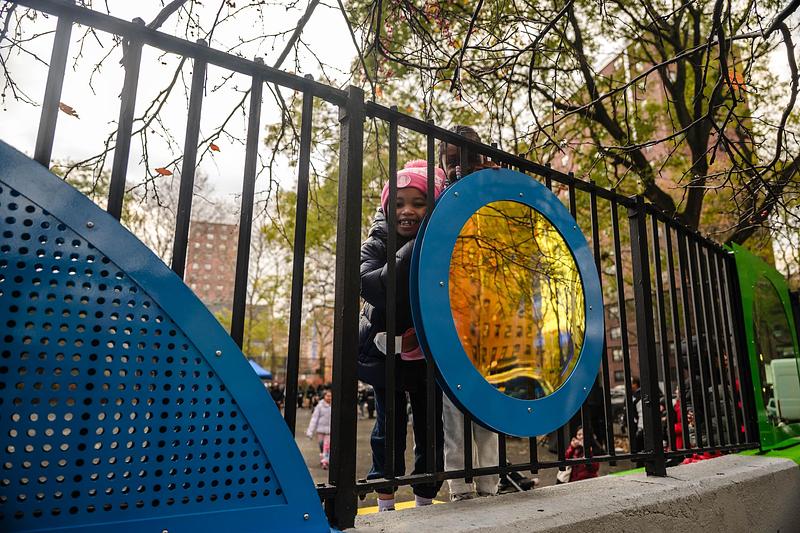
A forced-perspective mural ties all the zones together, moving seamlessly across surfaces and wrapping around the rear wall to signal that the space is part of a growing, evolving vision. The upper portion of the site features reflective, color-changing mirrors and perforated panels designed for community-created paracord art, creating a dynamic, shifting environment that continues to evolve. Along the risers, affirmations chosen by residents—such as “We Are The Future”, “Dream Big”, and “Stronger Together”—add layers of pride, encouragement, and identity to the space. The Common Corner is creating a renewed sense of communal connection, pride, and inspiration within Morris Houses.
“Common Corner represents what we can achieve when residents’ voices are truly heard,” said Regina Carter, President of the Morris Houses Residents Association. “For years, these bleachers sat empty, but through this project, they’ve been transformed into something beautiful and meaningful for everyone; a place where young people, older adults, and families alike can meet and play. For us, this is more than a space to sit; it’s a space to come together, to play, and to celebrate our community.”
The Common Corner has become a renewed point of communal connection, expression, and inspiration for the Morris Houses community. It is part of NYCHA’s Connected Communities program, which focuses on transforming and modernizing open spaces through public-private partnerships. The program’s efforts are based on participatory planning and design, striving to enhance physical and social connections between residents and their communities. Common Corner was developed for the community by the community. The co-design process ensured the residents developed an inclusive design that reflected the community's wants, needs, and ideas.
"The transformation of the Morris Houses bleachers into the Common Corner is a perfect example of NYCHA’s commitment to our Connected Communities program and the power of resident-led design," said NYCHA Chief Executive Officer Lisa Bova-Hiatt.
New York City Housing Authority
Technical sheet
Project Title: Common Corner
Clients: New York City Housing Authority, The Public Housing Community Fund, and The Center for Innovative Justice
Designer / Creator: The Urban Conga
Firm leads: Ryan Swanson & Maeghann Coleman
Website: https://www.theurbanconga.com/
Social: @theurbanconga
Year Installed: November 2025
Location: Morris Houses: 1480 Washington Ave, Bronx, NY 10456
Project Size: 424 sq ft
About The Urban Conga
The Urban Conga is an award-winning multidisciplinary design studio based in Brooklyn, NY, led by Ryan Swanson and Maeghann Coleman, AIA, NOMA. The studio is focused on sparking community interaction and social activity through open-ended play. Their work encourages people to think about the value of play beyond the playground, and how creating more play everywhere can dramatically impact our daily lives.
To achieve this, they utilize play methodologies as a critical tool within their designs, focusing on creating inclusive, multiscale spatial opportunities that transform once-overlooked or underutilized situations into stimulating creative outlets that evoke our innate drive to discover, explore, and empathize with others through play. Through this work, they have collaborated worldwide with municipal agencies, communities, institutions, private businesses, NGOs, and more, delivering a wide variety of work, from multiscale spatial interventions to public installations, temporary activations, workshops, development plans, and public policy recommendations.
For more information
Media contact
- Elisa Smilovitz
- elisa@elisasmilovitz.com
- Elisa Smilovitz
- 551.486.3273
Attachments
Terms and conditions
For immediate release
All photos must be published with proper credit. Please reference v2com as the source whenever possible. We always appreciate receiving PDF copies of your articles.
Medium-resolution image : 9.71 x 6.67 @ 300dpi ~ 2.8 MB
Medium-resolution image : 10.0 x 6.67 @ 300dpi ~ 890 KB
Medium-resolution image : 10.0 x 6.67 @ 300dpi ~ 1.2 MB
Medium-resolution image : 10.0 x 6.67 @ 300dpi ~ 2.4 MB
Very High-resolution image : 20.0 x 15.0 @ 300dpi ~ 16 MB
Medium-resolution image : 10.0 x 6.67 @ 300dpi ~ 760 KB
Medium-resolution image : 10.0 x 6.67 @ 300dpi ~ 1.3 MB
Medium-resolution image : 8.32 x 10.0 @ 300dpi ~ 3.1 MB
Medium-resolution image : 8.74 x 10.0 @ 300dpi ~ 2.6 MB
Medium-resolution image : 8.0 x 10.0 @ 300dpi ~ 780 KB
Medium-resolution image : 10.0 x 7.1 @ 300dpi ~ 5.6 MB
Medium-resolution image : 10.0 x 7.11 @ 300dpi ~ 4.8 MB
Medium-resolution image : 9.66 x 10.0 @ 300dpi ~ 4.5 MB
Medium-resolution image : 10.0 x 6.67 @ 300dpi ~ 650 KB
Medium-resolution image : 10.0 x 6.67 @ 300dpi ~ 1.8 MB
Medium-resolution image : 10.0 x 6.67 @ 300dpi ~ 2.5 MB
Medium-resolution image : 10.0 x 6.67 @ 300dpi ~ 1.6 MB
Medium-resolution image : 6.67 x 8.36 @ 300dpi ~ 1.4 MB
Medium-resolution image : 10.0 x 6.67 @ 300dpi ~ 1.8 MB
Medium-resolution image : 10.0 x 7.04 @ 300dpi ~ 5.1 MB
Very High-resolution image : 20.0 x 13.28 @ 300dpi ~ 10 MB
Very High-resolution image : 20.0 x 16.19 @ 300dpi ~ 9 MB
Very High-resolution image : 20.0 x 26.67 @ 300dpi ~ 15 MB
Medium-resolution image : 9.03 x 5.99 @ 300dpi ~ 3.6 MB
Very High-resolution image : 19.33 x 12.88 @ 300dpi ~ 13 MB
Advertising
You may also like...
Brooklyn, United States, 2026-06-02
The Urban Conga Unveils 'A Cappella', a New Public Art Installation Celebrating Jacksonville's Enduring Musical Legacy
The Urban Conga


New York, United States, 2024-06-06
A New Community-Designed Space Evokes Hopeful Conversation in the Brooklyn Neighborhood of South Baltimore
The Urban Conga

New York, United States, 2023-05-18
oPTIK, a New Interactive Sound and Light Installation in New York City
The Urban Conga

Brooklyn, United States, 2023-03-20
A New Playscape in Pittsburgh focuses on Sparking Communal Connection
The Urban Conga

New York, United States, 2023-01-24
A Series of Playable Art Installations Activate Revitalized Waterfront Park
The Urban Conga
Brooklyn, United States, 2022-06-28
Art Museum Terrace Transformed into a Programmable Community Space
The Urban Conga
Brooklyn, United States, 2022-03-22
Interactive Artwork Utilizes Play as a Tool to Spark an Open Conversation Around Sea Level Rise
The Urban Conga
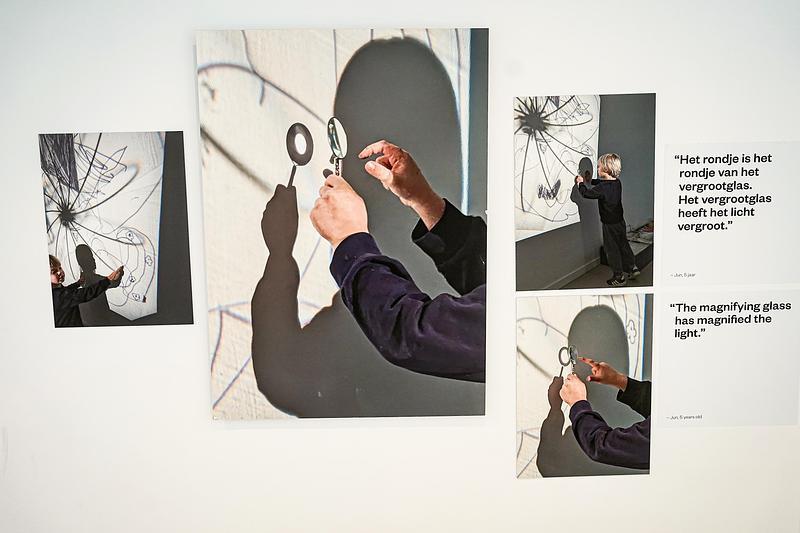
Amsterdam, Netherlands, 2026-06-09
KiMu Children's Art Museum Opens in Amsterdam
KiMu Kinderkunstmuseum
Toronto, Canada, 2026-05-06
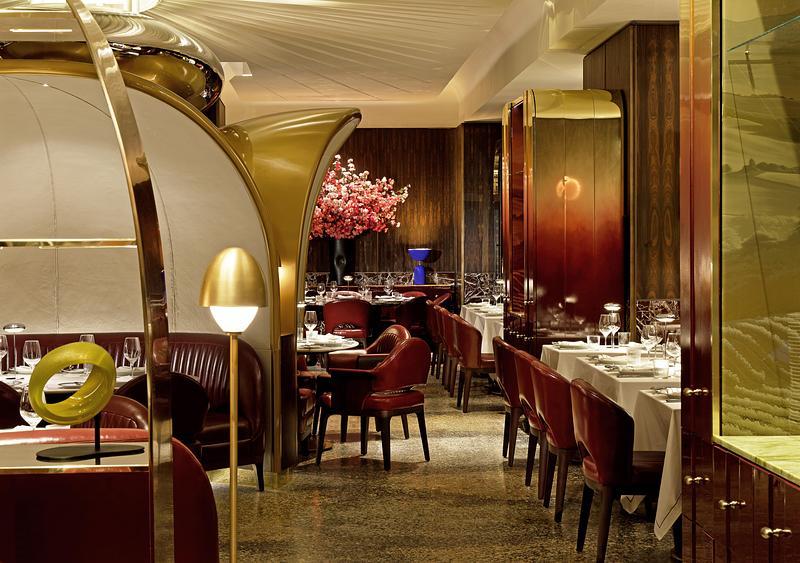
SAMMARCO Awarded Best Restaurant Design and Named Among Canada’s 100 Best Restaurants 2026
II BY IV DESIGN
Berwick-upon-Tweed, United Kingdom, 2026-03-04
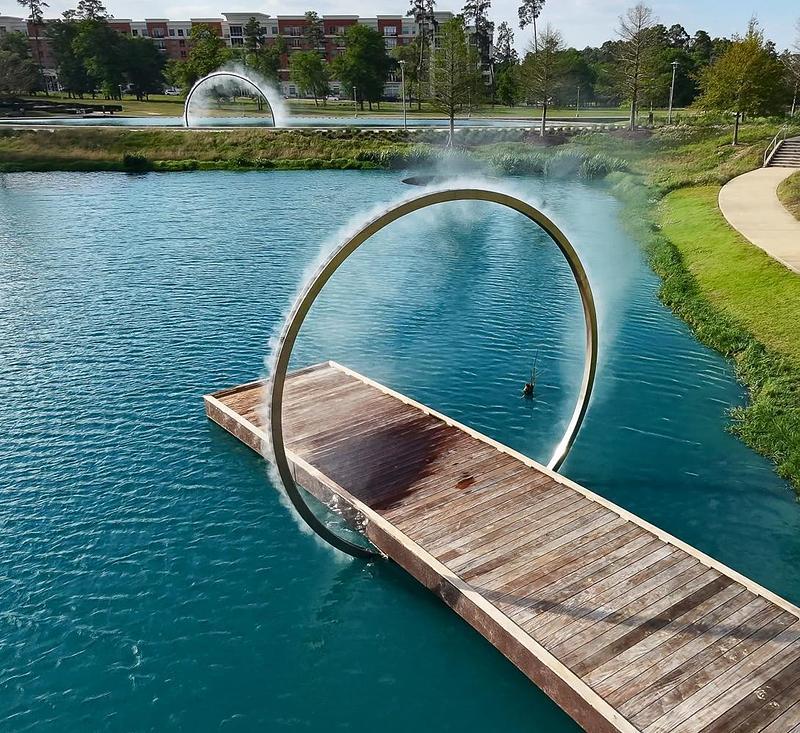
NEON Unveils Kinetic Installation Chorus Ventus at Lauritzen Gardens, Omaha
NEON